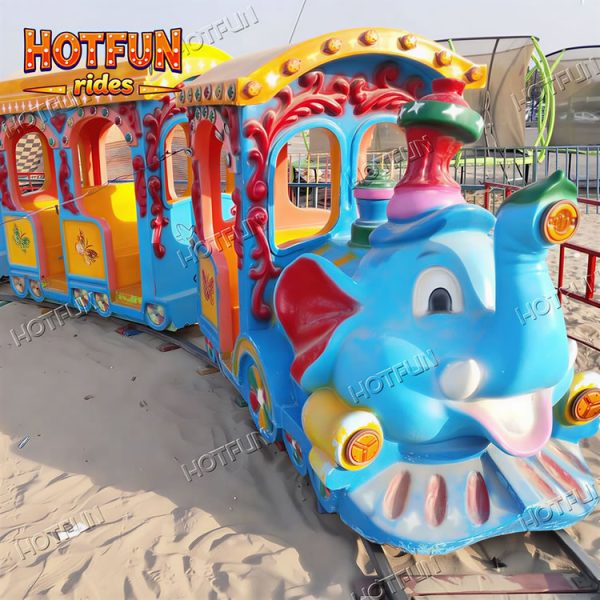
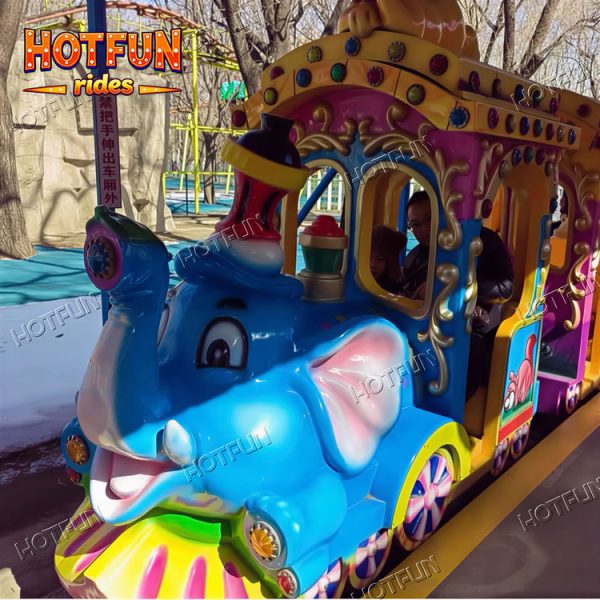
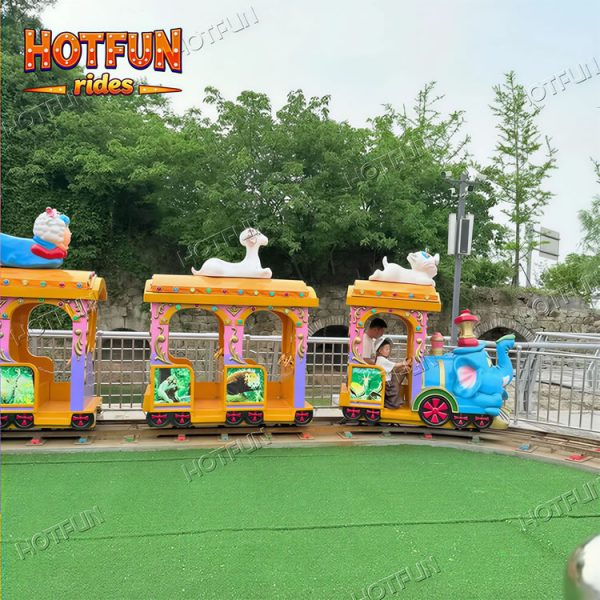
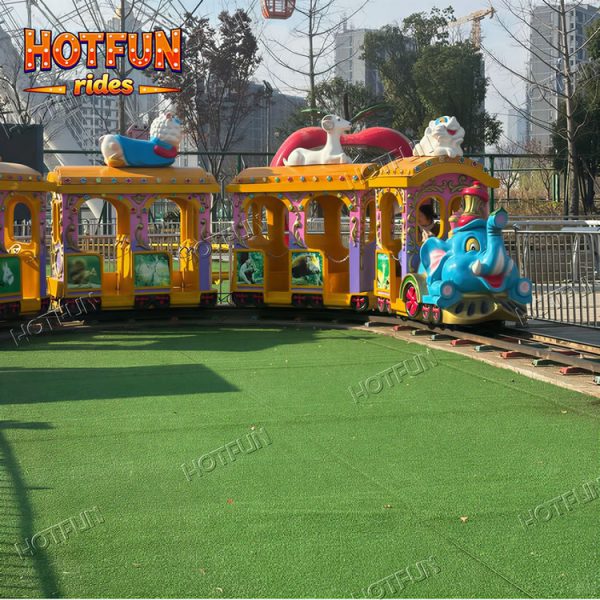
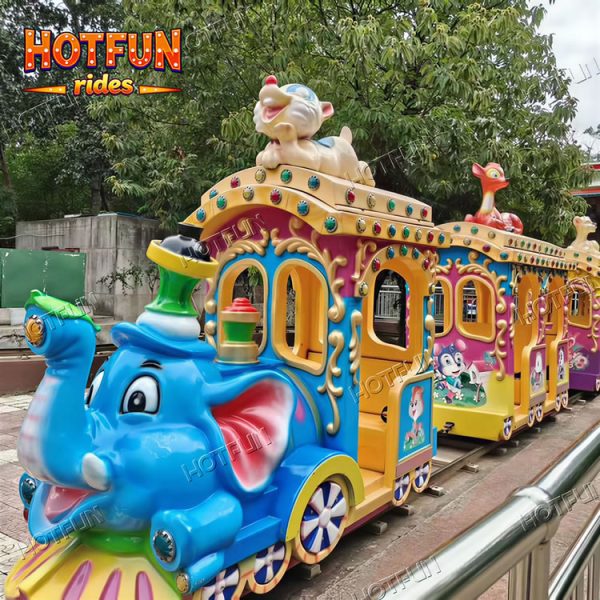
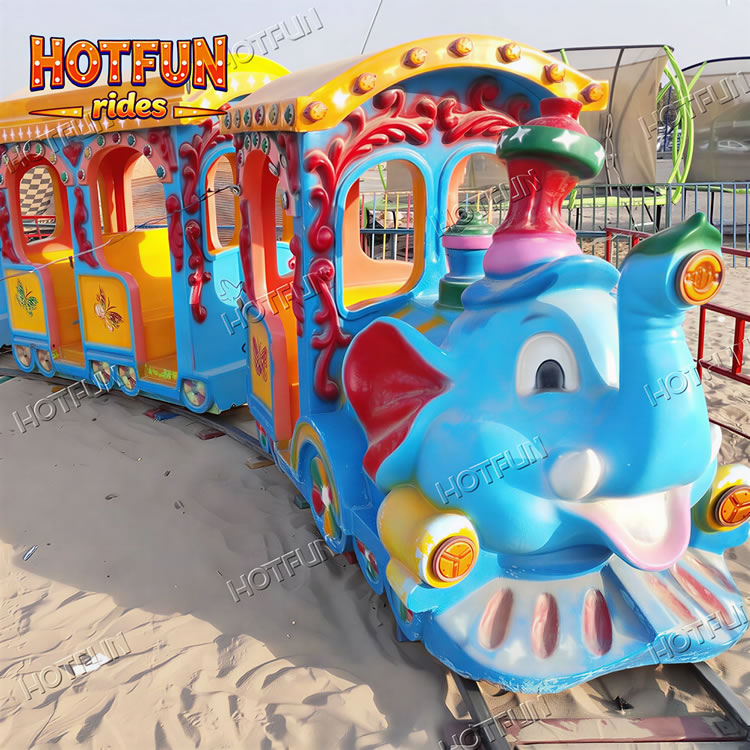
Proper operation and maintenance are critical for Elephant Train Rides, as these attractions are primarily used by children and often operate for long hours in family-focused environments.
A professional and disciplined management approach not only ensures safety but also directly impacts ride lifespan, appearance, and long-term profitability.
Before daily operation, operators should conduct a full visual and functional inspection. This includes checking carriage bodies for cracks or loose decorative elements, verifying seat integrity and safety restraints, and ensuring that all handrails and protective edges are secure.
Wheels, tires, or track interfaces should be inspected for abnormal wear, and steering response should be tested through a short unloaded trial run. Electrical systems, including batteries or power connections, must be checked to confirm stable voltage and proper charging levels.
During operating hours, staff should continuously monitor the ride’s performance. Operators should observe acceleration smoothness, braking response, and overall driving stability. Any unusual noise, vibration,
or steering resistance should be treated as an early warning sign rather than ignored. Because children are the primary riders, staff must also supervise boarding and seating to ensure passengers remain seated correctly and do not attempt unsafe behavior while the train is moving.
After daily operation, cleaning becomes a key task. Elephant Train Rides rely heavily on visual appeal, and worn or dirty surfaces quickly reduce perceived quality. Carriages should be wiped down, seats cleaned,
and decorative elements checked for damage. Mechanical components should be visually inspected again after cooling down, as some issues only become visible after extended use.
Weekly maintenance routines should focus on mechanical and electrical systems. This includes lubricating moving parts, inspecting drive motors, checking battery health or power connectors, tightening fasteners,
and testing emergency stop functions. Decorative elements should also be examined closely, as animal-themed components are more exposed to physical contact from children.
Periodic and long-term maintenance—typically monthly or quarterly—should involve deeper inspection of structural components, chassis alignment,
drive systems, and electrical wiring. Professional technicians should evaluate wear patterns and replace consumable parts before failures occur. Maintaining detailed maintenance logs helps operators track usage patterns and anticipate future servicing needs.
From a commercial perspective, disciplined operation and maintenance directly reduce downtime, extend equipment lifespan, and maintain a clean,
attractive appearance that encourages repeat family visits. For child-oriented attractions like Elephant Train Rides, consistent maintenance is not just a safety requirement—it is a core factor in sustaining revenue and protecting the venue’s reputation over the long term.