Welcome to Hotfun Rides website!





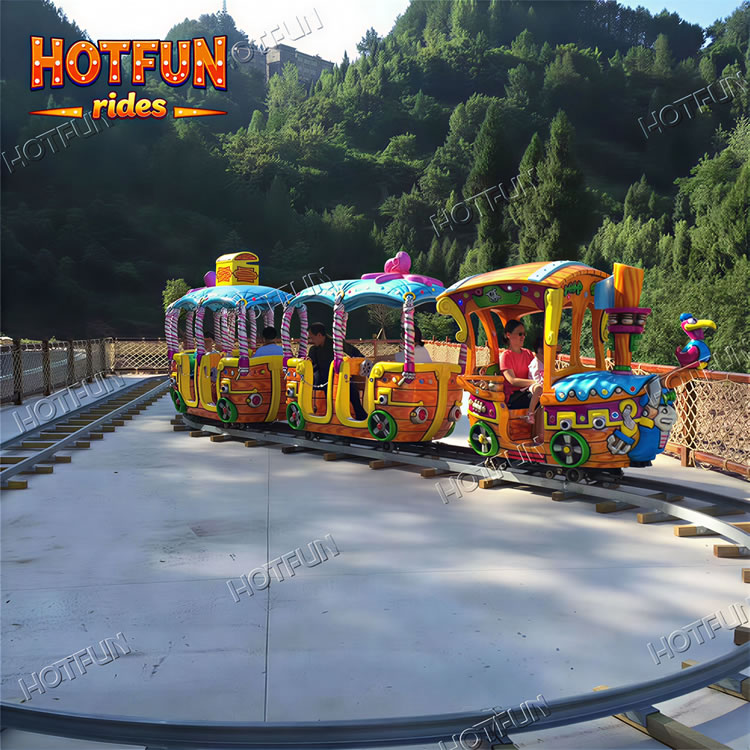
Electric or Diesel Trackless Amusement Train Rides? Frequently Asked Questions for International Buyers
Selecting the right Trackless Amusement Train goes far beyond choosing between electric or diesel. Real operators care about reliability, maintenance, regulatory compliance, climate adaptation, long-term costs, and market-specific constraints. This FAQ addresses all these practical concerns without repeating technical brochures.
Do local regulations affect the choice of electric or diesel trains?
Regulations are a critical factor. In cities, electric trains are often preferred because of low noise and zero emissions, which makes approval easier in pedestrian areas and public parks. Diesel units are generally allowed in rural or resort areas, but operators must ensure engines meet emission standards (Euro V, EPA Tier 4, etc.).
Before purchase, confirm:
- Whether municipal authorities have restrictions on diesel emissions
- Certification requirements for electric drive systems
- Insurance requirements related to fuel-powered vehicles
Failing to check local rules is one of the main causes of project delays.
How long do batteries and diesel engines last in real operation?
Electric trains:
- Lithium batteries typically last 4–6 years under moderate use (6–8 hours per day)
- Lead-acid batteries usually need replacement every 2–4 years
- Capacity loss reduces daily range but rarely causes sudden failure
Diesel trains:
- Engines can operate 6–10 years before major overhaul if maintained properly
- Oil changes, filter replacements, and periodic inspection are essential
- High-load or continuous operation without maintenance accelerates wear
Understanding realistic lifecycle expectations is crucial for cost planning.
Which power type is easier to insure?
Insurance evaluation often depends more on operational documentation than on power type.
- Electric trains are often perceived as lower environmental risk, simplifying approval for third-party liability.
- Diesel trains may require engine and fuel safety documentation but are insurable if proper maintenance schedules are followed.
- Operator training and clear maintenance logs reduce premiums more than the choice of power system alone.
How do electric and diesel trains perform in extreme climates?
- Hot climates: Batteries may degrade faster without proper cooling; diesel engines require high-quality fuel and filtration.
- Cold climates: Electric range can temporarily decrease, requiring pre-heating or indoor charging; diesel engines generally maintain consistent performance but may need special cold-start preparation.
- High altitude or humid areas: Diesel engines can handle thin air; electric trains need corrosion protection and climate-adapted components.
No system is universally superior; adaptation to local conditions is key.
What are the hidden long-term costs?
Electric: periodic battery replacement, potential charging infrastructure upgrades.
Diesel: oil, filters, and engine inspections, plus fuel cost variability.
Downtime is a hidden cost—charging delays or engine failures can reduce revenue.
Operators should consider lifecycle costs, including energy/fuel, spare parts, labor, and downtime—not only initial purchase price.
Regional Market Considerations
North America
- Municipal parks and urban pedestrian areas prefer electric trains for noise and emission control.
- Resorts and rural attractions still rely on diesel for long routes or steep terrain.
- Insurance documentation is rigorous, regardless of power type.
Europe
- Environmental regulations favor electric models, especially in city or historic areas.
- Diesel is acceptable with compliance to Euro V emission standards, often in mountainous or scenic routes.
- Noise control and CE certification are key approval factors.
Middle East
- High temperatures and long daily operation favor diesel for endurance.
- Electric units work if cooling is adequate and infrastructure is reliable.
- Luxury resorts may prioritize appearance and comfort over power type, but operational reliability remains decisive.
Southeast Asia and South America
- Electric units require stable power infrastructure; otherwise diesel is safer.
- Humidity and tropical climates necessitate corrosion-resistant electrical components.
- Budget-conscious markets weigh initial cost heavily, but long-term maintenance access is critical.
Government or Large Public Projects
- Environmental and sustainability metrics often favor electric systems.
- Tender documents may require detailed power and safety specifications.
- Approval and installation timelines can differ depending on power type.
How should operation and maintenance be structured?
Electric trains:
- Daily battery monitoring
- Weekly cable and connection inspection
- Periodic battery performance evaluation
- Clean charging environments to avoid overheating
Diesel trains:
- Scheduled oil changes
- Air and fuel filter replacement
- Cooling system inspection
- Proper fuel storage and handling
Common best practices for both:
- Maintain detailed inspection logs
- Keep a spare parts inventory
- Conduct annual safety audits
- Train operators on both daily checks and emergency procedures
Structured maintenance extends equipment life far more than power choice alone.
Final Recommendation
The best choice depends on operational environment, route terrain, daily running hours, climate, and long-term management capability.
- Choose electric for flat terrain, strict noise or emission restrictions, and predictable daily schedules.
- Choose diesel for steep, long-distance routes, continuous heavy operation, or areas with unreliable electrical infrastructure.
Investment success depends on matching train power to site realities—not trends or initial purchase price.
About HOTFUN: Your Trusted Trackless Train Manufacturer
Q: Who is HOTFUN and what makes your trains reliable?
A: HOTFUN is a source factory covering 10,000 square meters, with 25 years of experience producing amusement rides. We export to over 100 countries, offering multiple Trackless Amusement Train models, all customizable to your route and operational needs. As a direct manufacturer, HOTFUN provides professional technical support, ensures quality consistency, and delivers tailored solutions for theme parks, resorts, zoos, and tourist attractions worldwide.