Welcome to Hotfun Rides website!

Amusement Ride Galvanized Steel coating thickness?
If you ask three different suppliers about Amusement Ride Galvanized Steel Coating Thickness, you will probably get three answers.
80 microns
100 microns
or even higher
At first glance, it feels like a simple comparison. Thicker looks better. Higher sounds safer.
But once you actually step into production or inspect a finished structure, that logic starts to fall apart.
Because coating thickness is one of those parameters that looks clear on paper, but behaves differently in reality.
The Moment This Becomes a Real Problem
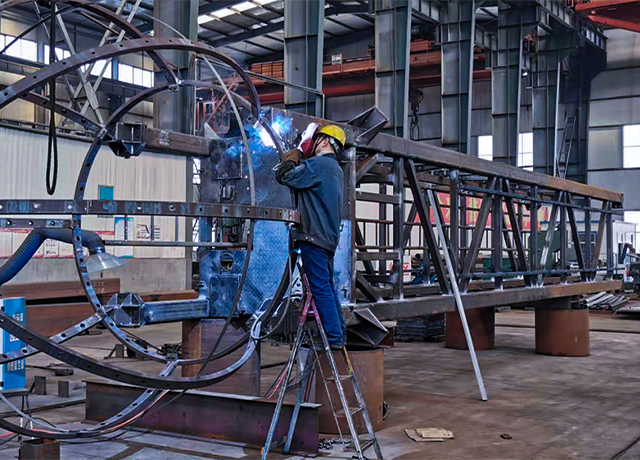
In one factory inspection, we checked two support columns for the same ride.
Both were marked as 100 micron galvanized.
One looked smooth, slightly matte, evenly finished.
The other had visible buildup around edges and welds.
Same thickness on report. Completely different performance risk.
That was the moment it became obvious:
Thickness is measured.
But quality is experienced.
What the Industry Actually Uses Not What People Assume
If we remove all marketing language and just look at real standards and factory outputs, the numbers are not extreme.
Typical hot dip galvanizing ranges:
- Around 65 to 85 microns for general outdoor steel
- Around 80 to 100 microns for structural amusement ride components
- Occasionally 100 to 120 microns for aggressive environments
Anything consistently above that is not common in mass production for rides.
Not because factories cannot do it
But because going thicker introduces its own problems
Where “Too Thick” Starts to Backfire
This is rarely discussed openly, but it shows up in workshops.
When coating becomes too thick, especially on complex welded structures:
- Zinc buildup becomes uneven
- Sharp edges accumulate excess material
- Cooling shrinkage can create micro cracking
On static structures, this might not matter much.
But on amusement rides, where structures move and vibrate, these small inconsistencies can become long term weak points.
So the real question is not maximum thickness
It is usable thickness
The Part Buyers Usually Miss Completely
Most buyers focus on the main frame.
But corrosion does not start there.
It usually starts at:
- Weld seams
- Bolt connections
- Edges and corners
These are the areas where coating consistency matters more than average thickness.
A uniform 85 micron coating across these details often performs better than a nominal 110 micron coating with variation.
What Happens After Six Months Outdoors
This is where theory meets reality.
In a dry inland location:
- Even 70 to 80 microns can remain visually stable for years
In humid or coastal environments:
- Early dulling and light oxidation can appear even at 100 microns
Not because the coating failed
But because environmental exposure behaves differently than lab expectations
So when evaluating Amusement Ride Galvanized Steel Coating Thickness, environment quietly overrides specification
How Factories Actually Control This in Practice
In real production, achieving perfect thickness is not the hardest part.
Consistency is.
Three variables affect everything:
- Surface preparation before dipping
- Immersion time in zinc bath
- Drainage behavior when removing the structure
Two parts in the same batch can end up slightly different if geometry affects how zinc flows off.
That is why experienced inspectors do not just check numbers
They check surfaces, edges, and transitions
How HOTFUN Approaches This Without Overcomplicating It
At HOTFUN, the approach is not to push thickness to the highest number.
It is to keep it within a stable working range and control variation.
In most projects:
- Main structures are controlled around 80 to 100 microns
- Weld areas are visually and physically inspected after coating
- Surface finishing is adjusted to avoid excessive buildup
The goal is simple
Make sure the coating behaves predictably after installation
Not just pass a measurement report
A More Useful Way to Evaluate a Supplier
Instead of asking “how thick is your galvanizing,” a better question is:
What happens if I visit your factory and look closely at the edges and welds
Because that is where real differences appear
Not in the specification sheet
Final Thought
Amusement Ride Galvanized Steel Coating Thickness sounds like a fixed number.
But in real projects, it behaves more like a range shaped by process, structure, and environment.
And the difference between a ride that stays stable for years and one that starts showing issues early
is usually not decided by the highest number
but by how evenly that number is applied