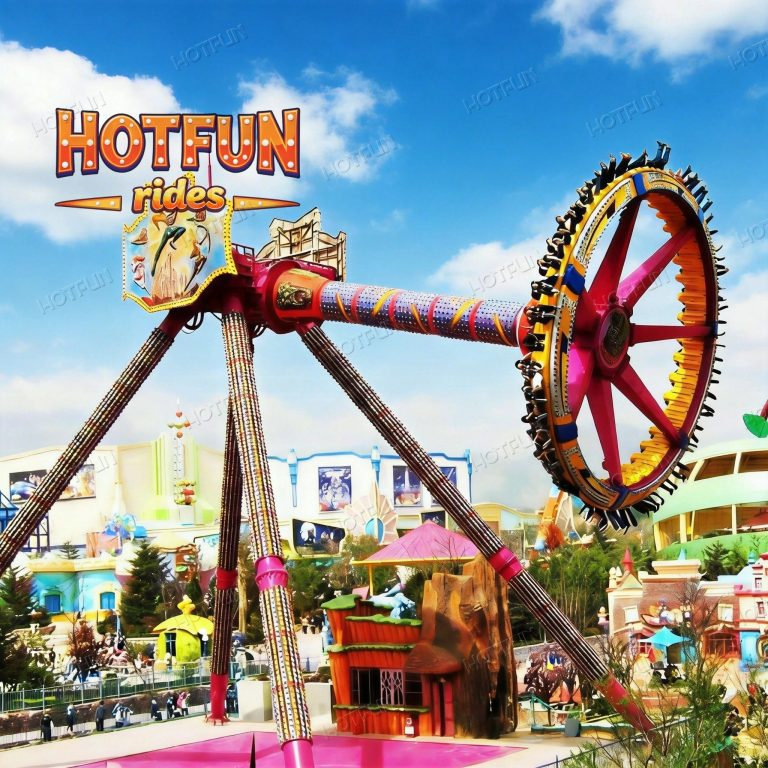
¡Bienvenido al sitio web de Hotfun Rides!



Personalización de Atracciones de Feria: Lo Que los Compradores Deben Decidir Antes de la Producción
Standard amusement rides are available in many configurations, but commercial projects often require equipment adapted to a particular site, theme or market.
This is where atracción de parque customization becomes important.
A buyer may want a different color scheme, customized passenger capacity, special lighting, themed fiberglass figures, modified dimensions or a particular electrical configuration.
However, customization should be confirmed systematically before production begins.
Changing one specification can sometimes affect another part of the equipment. Therefore, buyers and manufacturers should establish the technical requirements clearly before manufacturing starts.
1. Define the Purpose of Customization
Before discussing individual details, buyers should identify why the equipment needs to be customized.
Typical objectives include:
- Matching a park theme
- Fitting a specific site
- Adapting to local power standards
- Creating a distinctive appearance
- Adjusting passenger capacity
- Supporting a particular target market
- Matching existing park equipment
A clear objective helps the manufacturer determine which modifications are practical.
2. Appearance Customization
Appearance is one of the most common customization requirements.
Color
Buyers can often request specific colors for:
- Main structures
- Componentes de fibra de vidrio
- Asientos
- Decorative elements
- Protective railings
Instead of describing a color only as “blue” or “red,” buyers can provide a reference image, color code or existing brand specification.
Iluminación
LED lighting can be incorporated into many amusement rides.
Customization may involve:
- LED color
- Lighting layout
- Flashing patterns
- Static lighting
- Programmable lighting
The final configuration should be confirmed before production.
3. Themed Fiberglass and Decorative Elements
For themed parks, standard decorative components may not match the overall concept.
Manufacturers can sometimes develop customized fiberglass shapes or decorative elements according to approved designs.
Buyers should provide:
- Reference images
- Concept drawings
- Dimensiones
- Required theme
- Logo information
- Color references
For complex custom designs, additional engineering and mold-development requirements may apply.
4. Passenger Capacity
Capacity is another specification that may require discussion during customization.
For example, a buyer may want a ride configured for a particular number of passengers because of:
- Available space
- Target visitor groups
- Queue management
- Park operating requirements
However, passenger capacity is not simply a number that can always be increased or reduced.
It can affect:
- Vehicle or seat arrangement
- Structural loading
- Motor requirements
- Ride footprint
- Loading procedures
Therefore, capacity changes should be technically reviewed by the manufacturer.
5. Ride Dimensions and Site Constraints
A custom ride may need to fit a specific site.
Buyers should provide accurate information about:
- Available length
- Available width
- Available height
- Access routes
- Surrounding structures
- Service areas
The manufacturer’s engineering team can then evaluate whether the standard configuration is suitable or whether modification is necessary.
Leave Space for Operation
The equipment footprint is not always the same as the total operating area.
Clearance, passenger access, queue areas and maintenance access also need to be considered.
6. Electrical Configuration
International buyers should confirm the local electrical supply early.
Common project requirements can include:
- Voltaje
- Frecuencia
- Phase
- Motor configuration
- Sistema de control
- Lighting supply
For example, a project may require a different electrical configuration from the manufacturer’s standard domestic specification.
Providing the local power information before production can prevent unnecessary changes later.
7. Control System Requirements
Some buyers may have specific requirements for ride controls.
Customization discussions may include:
- Control cabinet arrangement
- Operator interface
- Emergency controls
- Ride operating logic
- Monitoring functions
- Sensor configuration
The actual control architecture depends on the ride type and engineering design.
Buyers should avoid specifying individual components without first confirming system compatibility with the manufacturer.
8. Seating and Passenger Comfort
For some rides, seating configuration can be customized within engineering limits.
Possible considerations include:
- Seat color
- Seat material
- Seat arrangement
- Restraint configuration
- Decorative seat design
The objective should be to balance appearance with the technical requirements of the ride.
9. Language and Signage
International amusement parks may require localized operating information.
Buyers can discuss:
- Control-panel language
- Safety labels
- Warning signs
- Passenger instructions
- Maintenance labels
- Documentation language
Providing translated text before production can make the final equipment more consistent.
10. Branding and Logo Integration
Commercial buyers may want equipment that reflects their own park identity.
Possible applications include:
- Logo placement
- Branded decorative panels
- Custom signage
- Themed color schemes
The buyer should provide high-resolution logo files and indicate the preferred placement.
For trademarked characters or third-party designs, the buyer is responsible for ensuring that the necessary usage rights are available.
11. What Cannot Be Changed Freely?
Customization has engineering limits.
Some elements should not be modified without technical review, including structural components, drive systems and safety-related systems.
For example, changing a decorative panel is very different from changing:
- Structural dimensions
- Passenger loading
- Potencia del motor
- Velocidad de operación
- Mechanical geometry
The manufacturer should evaluate any modification that could affect the ride’s original engineering parameters.
12. Provide a Complete Customization Brief
A professional buyer can prepare a simple customization document before production.
Basic Project Information
- Country
- Project type
- Modelo de la atracción
- Quantity
- Intended application
Technical Requirements
- Capacidad
- Dimensiones
- Voltaje
- Frecuencia
- Operating environment
Appearance
- Main colors
- LED requirements
- Fiberglass design
- Logo
- Decorative theme
Documentación
- Language
- Drawings
- Manuals
- Spare-parts information
- Electrical documentation
This gives both sides a single reference document.
13. Approve Drawings Before Manufacturing
For significant customization, buyers should review technical or appearance drawings before production.
The approval process can confirm:
- Dimensiones generales
- Color arrangement
- Seat configuration
- Decorative elements
- Logo placement
- Equipment orientation
Once the drawing is approved, it becomes an important reference for production.
14. Understand the Impact on Production
Customization can affect manufacturing time depending on its complexity.
A simple color adjustment may be straightforward, while a new fiberglass shape may require additional design and mold development.
Ejemplos incluyen:
Standard Color Change → Low Customization Complexity
New Decoration → Moderate Complexity
New Fiberglass Shape → Higher Complexity
Major Structural Modification → Engineering Review Required
Therefore, buyers should confirm customization requirements as early as possible.
15. Customization and Future Replacement Parts
A customized ride can have components or decorative elements that differ from standard production models.
This is one reason buyers should keep detailed records of the final configuration.
Useful records include:
- Final drawings
- Component specifications
- Customized part numbers
- Diagramas eléctricos
- Final color references
- Approved appearance drawings
These documents can help identify the correct configuration in the future.
16. Ask for a Final Specification Sheet
Before production begins, buyers should request a consolidated specification sheet.
It can include:
| Item | Information to Confirm |
|---|---|
| Modelo de la atracción | Final model |
| Capacidad | Número de pasajeros |
| Dimensiones | Final footprint and height |
| Potencia | Motor and total power |
| Voltaje | Local electrical requirement |
| Appearance | Approved colors |
| Iluminación | LED configuration |
| Decoration | Final design |
| Branding | Logo placement |
| Documentación | Required language |
This reduces misunderstandings between sales, engineering and production teams.
17. Customization Should Be Confirmed Before Production
The safest workflow for custom amusement equipment is:
Requirement → Design → Quotation → Drawing → Buyer Approval → Production → Inspection → Shipment
The earlier a modification is confirmed, the easier it is for the engineering and production teams to incorporate it.
Last-minute changes may result in additional production work, schedule changes or additional costs.
18. Work With a Manufacturer That Can Handle Custom Projects
Not every supplier has the same customization capability.
Buyers should evaluate whether the manufacturer has:
- In-house engineering
- Producción de fibra de vidrio
- Metal fabrication
- Ensamblaje eléctrico
- Instalaciones de pintura
- Assembly capacity
- Technical documentation
- Quality-control procedures
This is particularly important when the buyer requires more than a simple color change.
Conclusión
Amusement ride customization allows park developers, distributors and commercial operators to adapt equipment to specific themes, sites and market requirements.
However, successful customization depends on clear communication.
Buyers should define their requirements for appearance, dimensions, capacity, electrical configuration, controls, seating, branding and documentation before production.
The most important principle is simple: customize through an approved technical process, not through informal last-minute changes.
A clear customization brief and approved production drawings give both the buyer and manufacturer a common reference and help ensure that the finished equipment matches the agreed specification.
HOTFUN provides customized amusement equipment for international projects, including appearance, color, lighting, fiberglass decoration, capacity and project-specific technical configurations subject to engineering review.
Preguntas Frecuentes
Can amusement rides be customized in color?
Yes. Many amusement rides can be customized with different colors and lighting configurations according to the manufacturer’s production capabilities.
Can passenger capacity be changed?
Capacity may be adjustable for some ride models, but any change should be reviewed by the manufacturer’s engineering team because it can affect loading and structural parameters.
Can I provide my own ride design?
Buyers can provide concept drawings, reference images or design requirements. The manufacturer can then evaluate the design and determine the appropriate engineering approach.
Can I add my company logo to an amusement ride?
Logo placement can often be customized, subject to the equipment design and production requirements.
When should customization be confirmed?
Ideally, customization requirements should be confirmed before production drawings are approved so that engineering and manufacturing can follow the final specification.