¡Bienvenido al sitio web de Hotfun Rides!





Vuelo en Silla para Parques Temáticos y Carnavales: Capacidad, Estructura y Seguridad
A flying chair ride es una de las atracciones más reconocibles tanto en parques temáticos como en ferias itinerantes. Combina un movimiento circular suave con una experiencia de columpio suspendido, creando una atracción que atrae a visitantes de un amplio rango de edades.
A diferencia de las atracciones extremas dirigidas a un público reducido, flying chair rides están diseñadas en torno a la accesibilidad, el uso repetido y un rendimiento estable. Esto las convierte en una opción común para los operadores de parques que desean una atracción confiable que funcione de manera consistente en diferentes temporadas y perfiles de visitantes.
En este artículo, desglosamos el diseño de capacidad, sistema estructural e ingeniería de seguridad detrás de las modernas flying chair rides, utilizando estándares reales de la industria del entretenimiento.
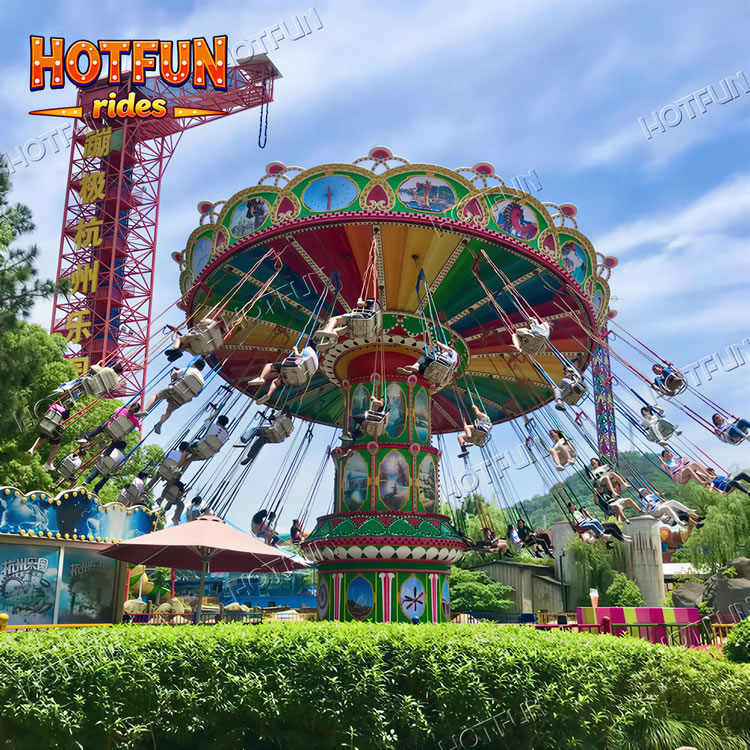
1. ¿Qué Define una Flying Chair Ride?
Una flying chair ride (también llamada carrusel de columpios o atracción de columpios aéreos) es una atracción centrífuga donde los asientos están suspendidos de una estructura superior giratoria.
A medida que aumenta la velocidad de rotación, las cadenas se inclinan hacia afuera debido a la fuerza centrífuga, elevando a los pasajeros en un movimiento de vuelo.
Características Principales de la Experiencia
- Movimiento rotacional suave
- Efecto de elevación gradual
- Niveles de velocidad ajustables
- Vista panorámica al aire libre
- Adecuada para familias y adolescentes
La experiencia está diseñada para sentirse dinámica pero no abrumadora, razón por la cual funciona bien tanto en parques fijos como en instalaciones de ferias móviles.
2. Diseño de Capacidad en Flying Chair Rides
La capacidad es uno de los factores más importantes para los operadores de parques de atracciones, ya que afecta directamente los ingresos por hora y el flujo de la fila.
Las modernas flying chair rides están diseñadas con distribución equilibrada de asientos y eficiencia rotacional.
Rango Típico de Capacidad
- Modelos pequeños: 12–16 asientos
- Modelos medianos: 24–36 asientos
- Modelos grandes: 40–64 asientos
El número de asientos no es el único factor que determina el rendimiento. La velocidad de rotación, el tiempo de carga y el espaciado de los asientos contribuyen a la capacidad operativa real.
Cómo Afecta la Capacidad al Rendimiento
Los operadores a menudo evalúan las atracciones utilizando TPH (Turnos por Hora).
Una flying chair ride bien optimizada generalmente logra:
- 10–16 ciclos por hora
- 200–800 pasajeros por hora (dependiendo del tamaño del modelo)
Esto la convierte en una de las atracciones familiares más eficientes en un parque.
3. Sistema Estructural de una Flying Chair Ride
El diseño estructural está ingenierizado para equilibrar la estabilidad del movimiento, la resistencia al viento y el rendimiento frente a la fatiga a largo plazo.
Una flying chair ride estándar consta de cuatro sistemas principales:
1. Estructura de la Torre Central
La torre es el elemento principal de soporte de carga.
- Generalmente fabricada con acero estructural Q235B o Q355B
- Diseñada con refuerzo triangular o cilíndrico
- Tratada con sistemas de recubrimiento anticorrosión
La torre debe soportar tanto la carga vertical como la fuerza lateral generada durante la rotación a alta velocidad.
2. Conjunto Superior Giratorio
Este es el sistema mecánico central que impulsa el movimiento.
Los componentes clave incluyen:
- Cubo giratorio principal
- Sistema de rodamientos
- Sistema de motor de accionamiento
- Estructura de transmisión
El sistema debe mantener una rotación suave bajo carga completa de pasajeros sin vibraciones ni desequilibrios.
3. Sistema de Brazos de Suspensión
Cada asiento está conectado a la parte superior giratoria mediante cadenas o brazos de acero.
Las consideraciones de diseño incluyen:
- Distribución de carga por asiento
- Control del ángulo de balanceo
- Resistencia a la fatiga bajo operación continua
Los sistemas de suspensión se prueban bajo condiciones de carga dinámica repetida para garantizar durabilidad a largo plazo.
4. Unidades de Asientos
Los asientos suelen diseñarse utilizando:
- Fibra de vidrio reforzada (FRP)
- Estructura de marco de acero
- Sistemas de sujeción de seguridad
El diseño ergonómico es importante porque los pasajeros experimentan tanto la rotación como la elevación centrífuga.
4. Estructura Operativa y Comportamiento de Movimiento
Un juego de sillas voladoras opera mediante una variación controlada de la velocidad.
Etapas de Movimiento
1. Fase de inicio
El juego comienza a baja velocidad para permitir la confirmación segura del embarque.
2. Fase de aceleración
La velocidad aumenta gradualmente, provocando que los asientos se extiendan hacia afuera.
3. Fase de rotación estable
El juego alcanza la velocidad óptima para un movimiento de balanceo completo.
4. Fase de desaceleración
La velocidad se reduce suavemente antes de regresar a la posición de embarque.
Este ciclo controlado garantiza tanto la seguridad como la comodidad del pasajero.
5. Diseño del Sistema de Seguridad
La seguridad es el aspecto más crítico de cualquier sistema de juegos mecánicos, especialmente en aquellos que implican movimiento suspendido.
Componentes Clave de Seguridad
Sistema de Frenado de Emergencia
- Protección dual mecánica y eléctrica
- Parada controlada sin impacto repentino
Control de Límite de Velocidad
- Previene condiciones de exceso de velocidad
- Monitoreado a través del sistema PLC
Sistema de Bloqueo de Asientos
- Bloqueo mecánico antes de iniciar la operación
- Verificaciones de seguridad redundantes
Protección contra Carga de Viento
- Diseñado para operar bajo condiciones de viento específicas
- Apagado automático en condiciones climáticas extremas
6. Consideraciones de Carga Estructural e Ingeniería
Las sillas voladoras deben someterse a estrictos cálculos de ingeniería antes de su producción.
Principales Tipos de Carga
- Carga estática (estructura + pasajeros)
- Carga dinámica (fuerza de rotación)
- Carga de viento (operación al aire libre)
- Carga de fatiga (ciclos de uso a largo plazo)
Los ingenieros simulan miles de ciclos operativos para garantizar la integridad estructural con el tiempo.
7. Materiales Utilizados en Sillas Voladoras Modernas
La selección de materiales afecta directamente la durabilidad y el costo de mantenimiento.
Materiales Comunes
- Acero estructural (Q235B / Q355B)
- Sujetadores de acero inoxidable
- Piezas decorativas de fibra de vidrio (FRP)
- Sistemas de recubrimiento anticorrosión
- Rodamientos de grado industrial
Los materiales de alta calidad reducen la frecuencia de mantenimiento y mejoran la vida útil del juego.
8. Requisitos de Instalación
Las sillas voladoras requieren una preparación adecuada del sitio antes de la instalación.
Requisitos Básicos
- Base de cimentación de concreto
- Superficie del terreno nivelada
- Suministro eléctrico (generalmente voltaje industrial de 380V)
- Zona de seguridad libre alrededor del juego
El tiempo de instalación depende del tamaño del modelo, pero generalmente varía de varios días a dos semanas.
9. Mantenimiento y Operación
El mantenimiento regular es esencial para una operación segura a largo plazo.
Verificaciones Diarias
- Inspección visual de cadenas y asientos
- Verificación del motor y sistema de control
- Inspección de pernos y conexiones
Mantenimiento Periódico
- Lubricación de piezas giratorias
- Diagnóstico del sistema eléctrico
- Inspección estructural por fatiga
Los juegos bien mantenidos pueden operar durante muchos años con un rendimiento estable.
10. Por Qué las Sillas Voladoras Siguen Siendo Populares
A pesar de la introducción de atracciones modernas de alta adrenalina, flying chair rides siguen instalándose ampliamente en todo el mundo.
La razón es simple:
Equilibran eficiencia de costos, atractivo visual y demanda constante de pasajeros..
Los operadores los valoran porque:
- Atraen a audiencias familiares
- Funcionan de manera confiable con poco tiempo de inactividad
- Proporcionan un fuerte movimiento visual en los parques
- Ofrecen un retorno de inversión estable
11. Capacidad de Fabricación de HOTFUN
HOTFUN es un fabricante de atracciones mecánicas con amplia experiencia en el diseño y exportación de sistemas de atracciones para mercados globales.
La empresa se enfoca en:
- Diseño de ingeniería estructural
- Fabricación de atracciones personalizadas
- Normas internacionales de seguridad
- Embalaje de exportación y soporte logístico
- Instalación y orientación técnica
Cada atracción de sillas voladoras está diseñada según los requisitos operativos, las condiciones del sitio y los estándares del mercado objetivo.
Conclusión
Una atracción de sillas voladoras no es solo una simple atracción de entretenimiento: es un sistema cuidadosamente diseñado que combina diseño mecánico, seguridad estructural y optimización de la experiencia del visitante.
Comprender su diseño de capacidad, estructura estructural y sistemas de seguridad ayuda a los operadores a tomar mejores decisiones de inversión y garantiza una estabilidad operativa a largo plazo.
Para los parques de diversiones y operadores de carnavales, sigue siendo una de las opciones más confiables y versátiles.