Bienvenue sur le site de Hotfun Rides !






Épaisseur du Revêtement en Acier Galvanisé pour les Manèges ?
Si vous interrogez trois fournisseurs différents au sujet de l’épaisseur du revêtement en acier galvanisé pour manèges, vous obtiendrez probablement trois réponses différentes.
80 microns
100 microns
ou même plus
À première vue, cela semble une simple comparaison. Plus épais semble meilleur. Plus élevé paraît plus sûr.
Mais dès que l’on entre en production ou que l’on inspecte une structure finie, cette logique commence à s’effondrer.
Car l’épaisseur du revêtement est l’un de ces paramètres qui semblent clairs sur le papier, mais se comportent différemment dans la réalité.
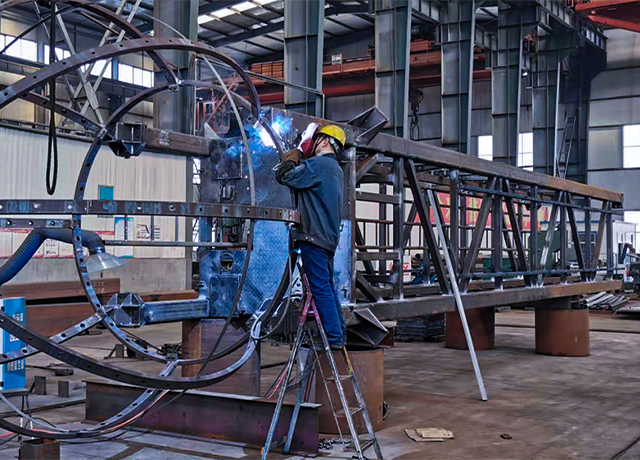
Le moment où cela devient un véritable problème
Lors d’une inspection en usine, nous avons vérifié deux poteaux de support pour le même manège.
Les deux étaient marqués comme galvanisés à 100 microns.
L’un semblait lisse, légèrement mat, avec une finition uniforme.
L’autre présentait des accumulations visibles autour des bords et des soudures.
Même épaisseur sur le rapport. Risque de performance complètement différent.
C’est à ce moment que l’évidence est apparue :
L’épaisseur se mesure.
Mais la qualité se ressent.
Ce que l’industrie utilise réellement, et non ce que l’on suppose
Si nous supprimons tout langage marketing et ne regardons que les normes réelles et les résultats d’usine, les chiffres ne sont pas extrêmes.
Plages typiques de galvanisation à chaud :
- Environ 65 à 85 microns pour l’acier extérieur général
- Environ 80 à 100 microns pour les composants structurels de manèges
- Parfois 100 à 120 microns pour les environnements agressifs
Tout ce qui dépasse systématiquement ces valeurs n’est pas courant dans la production en série pour les manèges.
Non pas parce que les usines ne peuvent pas le faire
Mais parce qu’une épaisseur plus élevée introduit ses propres problèmes
Là où “ trop épais ” commence à se retourner contre vous
Cela est rarement discuté ouvertement, mais cela se manifeste dans les ateliers.
Lorsque le revêtement devient trop épais, en particulier sur les structures soudées complexes :
- L’accumulation de zinc devient inégale
- Les bords tranchants accumulent un excès de matière
- Le retrait lors du refroidissement peut créer des microfissures
Sur les structures statiques, cela peut ne pas avoir beaucoup d’importance.
Mais sur les manèges, où les structures bougent et vibrent, ces petites irrégularités peuvent devenir des points faibles à long terme.
La véritable question n’est donc pas l’épaisseur maximale
Mais l’épaisseur utilisable
La partie que les acheteurs négligent généralement complètement
La plupart des acheteurs se concentrent sur le cadre principal.
Mais la corrosion ne commence pas là.
Elle commence généralement à :
- Joints de soudure
- Connexions boulonnées
- Bords et coins
Ce sont les zones où la régularité du revêtement importe plus que l’épaisseur moyenne.
Un revêtement uniforme de 85 microns sur ces détails surpasse souvent un revêtement nominal de 110 microns avec des variations.
Ce qui se produit après six mois à l’extérieur
C’est là que la théorie rencontre la réalité.
Dans un site intérieur sec :
- Même 70 à 80 microns peuvent rester visuellement stables pendant des années
Dans des environnements humides ou côtiers :
- Un ternissement précoce et une légère oxydation peuvent apparaître même à 100 microns
Non pas parce que le revêtement a échoué
Mais parce que l’exposition environnementale se comporte différemment des attentes en laboratoire
Ainsi, lors de l’évaluation l’épaisseur du revêtement en acier galvanisé pour manèges, l’environnement supplante silencieusement les spécifications
Comment les usines contrôlent-elles cela en pratique
En production réelle, atteindre une épaisseur parfaite n’est pas la partie la plus difficile.
La régularité l’est.
Trois variables affectent tout :
- Préparation de surface avant immersion
- Temps d’immersion dans le bain de zinc
- Comportement d’écoulement lors du retrait de la structure
Deux pièces du même lot peuvent finir légèrement différentes si la géométrie affecte la façon dont le zinc s’écoule.
C'est pourquoi les inspecteurs expérimentés ne se contentent pas de vérifier les chiffres.
Ils vérifient les surfaces, les arêtes et les transitions.
Comment HOTFUN Aborder cela sans trop compliquer les choses
Chez HOTFUN, L'approche ne consiste pas à pousser l'épaisseur au chiffre le plus élevé.
Elle consiste à la maintenir dans une plage de travail stable et à maîtriser la variation.
Dans la plupart des projets :
- Les structures principales sont contrôlées autour de 80 à 100 microns.
- Les zones de soudure sont inspectées visuellement et physiquement après revêtement.
- La finition de surface est ajustée pour éviter une accumulation excessive.
L'objectif est simple :
S'assurer que le revêtement se comporte de manière prévisible après installation.
Pas seulement valider un rapport de mesure.
Une manière plus utile d'évaluer un fournisseur
Plutôt que de demander “ quelle est l'épaisseur de votre galvanisation ”, une meilleure question est :
Que se passe-t-il si je visite votre usine et que j'examine attentivement les arêtes et les soudures ?
Car c'est là que les véritables différences apparaissent.
Pas dans la fiche technique.
Réflexion finale
l’épaisseur du revêtement en acier galvanisé pour manèges semble être un chiffre fixe.
Mais dans les projets réels, cela se comporte davantage comme une plage influencée par le procédé, la structure et l'environnement.
Et la différence entre une installation qui reste stable pendant des années et une qui commence à présenter des problèmes précocement
n'est généralement pas déterminée par le chiffre le plus élevé,
mais par l'uniformité d'application de ce chiffre.