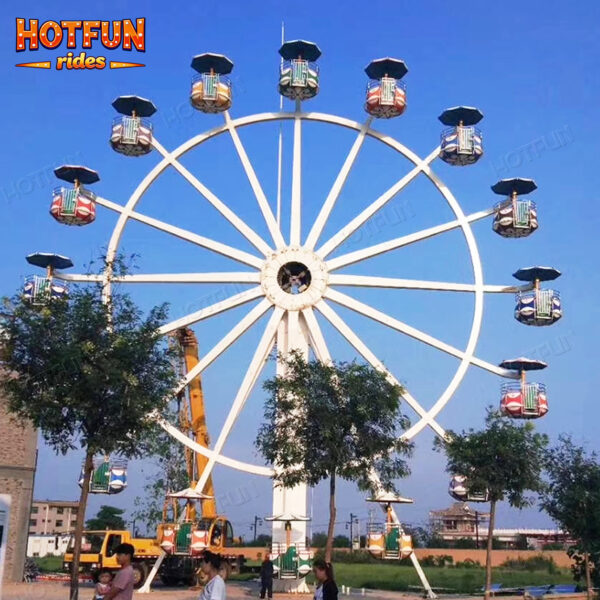
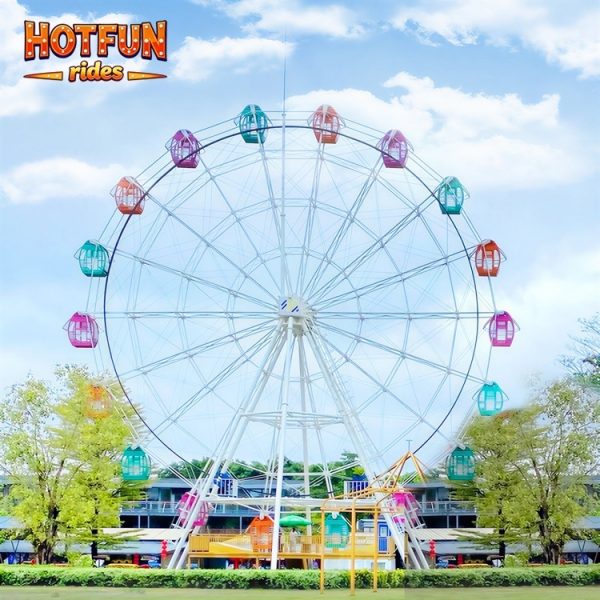
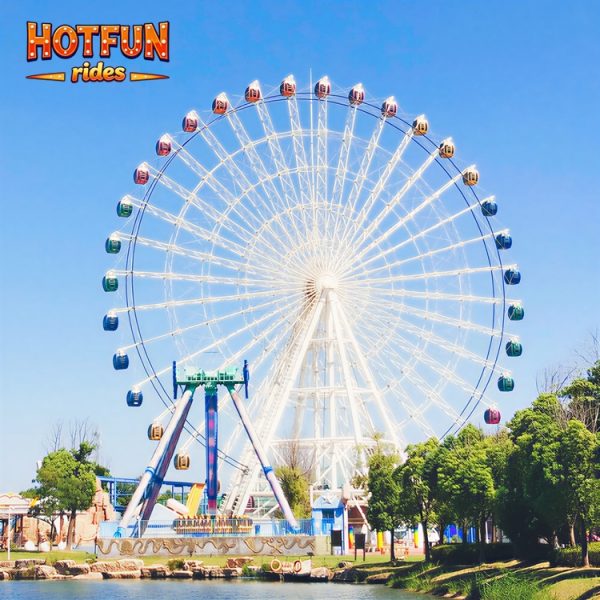
The daily operation and maintenance of a 20m Ferris Wheel must follow a standardized and disciplined management process to ensure long-term safety and stable performance.
Before opening each day, operators should conduct a comprehensive pre-operation inspection. This includes checking the appearance and structural integrity of each cabin, ensuring all doors, locking mechanisms, and safety components are fully functional. Any signs of deformation, looseness, or abnormal wear must be addressed immediately before operation.
A no-load test run should be performed prior to carrying passengers. During this test, operators should observe rotation smoothness, listen for unusual sounds, and confirm that acceleration and deceleration remain stable throughout the cycle.
During passenger boarding, staff must guide visitors to enter and exit cabins in an orderly manner. Visitors should be instructed to remain seated throughout the ride and avoid unnecessary movement inside the cabin. Special attention should be given to children, elderly passengers, and family groups to ensure correct seating and secure cabin closure.
Throughout daily operation, at least one trained operator should continuously monitor the 20m Ferris Wheel. Any abnormal vibration, noise, or irregular motion must trigger an immediate stop and inspection. Operations should be adjusted or suspended during extreme weather conditions according to local safety regulations.
After daily closure, routine cleaning should be carried out inside and outside the cabins. Moisture, dust, and debris should be removed to maintain cabin comfort and prevent material degradation. Key moving parts should be lubricated according to the specified maintenance schedule.
Weekly inspections should include checks on structural connections, fastening components, and transmission systems. These inspections help identify early signs of fatigue or wear before they develop into operational risks.
Monthly or quarterly inspections should be performed by qualified technical personnel. These inspections typically include structural stress evaluation, electrical system stability checks, and overall safety performance assessment.
All inspection, maintenance, and repair activities should be recorded in detail. Complete maintenance logs are essential for compliance, safety audits, and long-term asset management.
Operators must receive professional training before independently operating the 20m Ferris Wheel. Unauthorized personnel should never perform operation or maintenance tasks.
By implementing standardized operating procedures and preventive maintenance strategies, a 20m Ferris Wheel can maintain high safety standards, consistent ride quality, and strong commercial value throughout its operational life cycle.