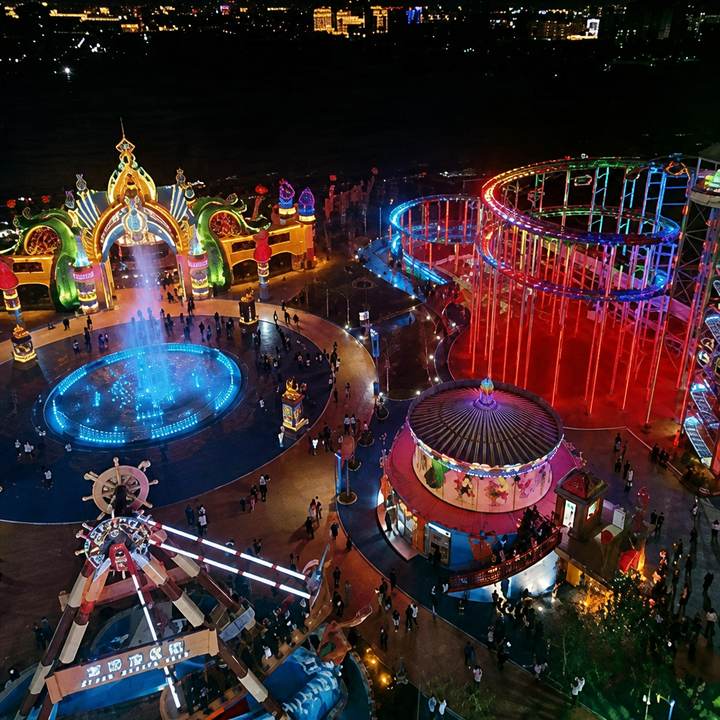
Welcome to Hotfun Rides website!






Amusement Ride Shipping Container: How Real Projects Handle Transport, Packing, and Cost Control
When clients first ask about Amusement Ride Shipping Container arrangements, most of them are focused on one thing: how many containers are needed and how much it costs.
But from our side, shipping is never calculated that way at the beginning.
The first question we usually ask is:
“How will this ride be unloaded and installed after it arrives?”
Because in real projects, Amusement Ride Shipping Container planning is not just about loading efficiency—it determines whether the equipment can even be handled properly at the destination.
We’ve seen projects where everything looked fine on paper, but once the container arrived, the client realized they couldn’t unload a single oversized part without renting a crane at high cost.
So the real work starts long before the container is booked.
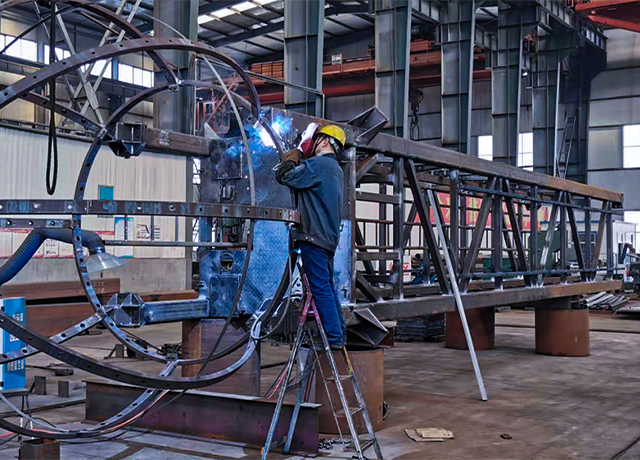
We Don’t Start With Containers — We Start With Disassembly
In factory practice, we never begin with “20ft or 40ft container.”
We start by walking through the structure of the ride.
For example, with a medium-sized carousel:
- The central column can usually remain intact
- The platform is split into multiple radial sections
- Decorative panels are separated early to avoid damage
At this stage, we already decide which parts must not be further disassembled, and which parts can be reduced in size.
This step directly affects the final Amusement Ride Shipping Container plan, but more importantly—it affects installation speed later.
If you disassemble too much, shipping becomes easier, but installation becomes slower and more complex.
If you disassemble too little, shipping becomes expensive or even impossible.
That balance is something you only get right after doing enough real projects.
Container Choice Is Usually Forced by One or Two “Problem Parts”
In most shipments, 80% of the components fit standard containers without any issue.
The real challenge is always the remaining 20%.
Typically, it’s one of these:
- A canopy section that exceeds height limits
- A welded base frame that cannot be split
- A decorative structure that would be damaged if cut
We’ve had cases where everything was planned for a 40ft container, and then one single component forced us to switch to an open-top container.
That one decision increased shipping cost by more than expected.
So when we plan Amusement Ride Shipping Container, we don’t optimize for average parts—we optimize for the largest and most restrictive component.
Packing Is Not About Filling Space — It’s About Controlling Movement
A common misunderstanding is that container loading is about maximizing volume.
In reality, it’s about preventing movement.
Inside the container:
- Steel structures are fixed using welded supports or bolted frames
- Gaps are intentionally left where needed to avoid pressure damage
- Fragile parts are isolated, not compressed together
We’ve seen shipments where everything was tightly packed, but decorative fiberglass parts arrived cracked because there was no buffer space.
So a “perfectly full” container is not always a good container.
In many cases, we deliberately leave 10–15% unused space to protect key components.
The Most Overlooked Part: Destination Conditions
One mistake buyers often make is assuming the destination is ready to receive the equipment.
In reality, this is where many problems appear.
For example:
- No forklift with sufficient capacity
- No crane access due to site layout
- Narrow entrances that prevent large parts from passing through
In one indoor project, the container arrived on time, but the client couldn’t move the main structure into the building. We had to guide them to partially disassemble it on-site, which increased labor time significantly.
Since then, we always ask for:
- Site photos
- Entrance dimensions
- Available unloading equipment
These details influence how we finalize the Amusement Ride Shipping Container configuration.
How HOTFUN Handles Shipping Differently
At HOTFUN, shipping is not treated as a separate logistics step—it’s part of the engineering process.
Pre-Loading Simulation
Before packing, we simulate how components will be arranged inside the container. This avoids last-minute surprises.
Structural Planning for Transport
We design connection points so that large structures can be split without affecting strength. This helps keep more shipments within standard container limits.
Packaging Based on Risk, Not Just Size
Instead of treating all parts equally, we identify high-risk components (painted surfaces, lighting, fiberglass) and give them priority protection.
Installation-Oriented Packing
We also think about how the client will unpack the container.
Heavier structural parts are positioned for easy unloading first, instead of being buried under smaller components.
This small detail often saves hours—or even days—during installation.
Shipping Decisions Affect Installation More Than You Think
One thing many new buyers don’t realize is that Amusement Ride Shipping Container planning directly impacts installation efficiency.
If components arrive in logical order and are easy to identify:
- Installation is faster
- Labor cost is lower
- Risk of assembly errors is reduced
If not, even a simple ride can become time-consuming to assemble.
From experience, good shipping planning can reduce installation time by around 20%, not because the work is easier—but because it is better organized.
Final Thought: Shipping Is Part of the Product
After handling enough export projects, one thing becomes clear:
Shipping is not something that happens after production—it is part of the product itself.
A well-designed ride that is poorly packed can still create problems.
A properly planned Amusement Ride Shipping Container solution, on the other hand, makes everything smoother—from unloading to final operation.
That’s why experienced manufacturers don’t separate engineering and logistics. They treat them as one continuous process.